The ISG of Gabes and the Economie Entreprise Environnement (EEE) Research Unit will organize the TSEM 2023 under the theme "Crises and resilience: from fragility to agility of countries and organizations". The symposium will be held 3-4-5 November, 2023 at Djerba Island, Tunisia.The symposium is an opportunity for researchers to present their new research papers.
For two decades, the global economy has entered a cycle of growing instability. The crises have become repetitive and some go so far as to say that the crisis is permanent today and the environment is uncertain and unstable by nature. Faced with this new situation and this new environment, any organization is faced with major challenges and risks that can affect its financial situation, its relationships with its customers and partners and ultimately its survival. This change leads to rethinking to new management methods, work procedures and skills development. Developing resilience capacities in order to continuously adapt the company to these disturbances then becomes the main challenge in order to establish sustainability in business.
The major risks facing organizations and countries are manifested by crises. In fact, over the past two decades, the world has seen the appearance of several types of crisis: from the 2007-2008 financial crisis to the health crisis - generated by the Covid-19 pandemic, to which is added a economy caused by the war between Ukraine and Russia. Finally, health crises have returned to remind us of the vulnerability of the global economic system to natural laws. Coronaviruses are still around and just one of these viruses has shut down the global economy for almost two years. The Covid-19 pandemic, initially a health crisis, has caused an economic, social and societal crisis. This period, post-covid-19, therefore invites scientific reflection, even if hindsight is lacking.
This multidisciplinary symposium, TSEM 2023, aims to analyze the experiences of resilience and agility to deal with crises and shocks in the contemporary period. It will allow the various speakers to present their work, share their experiences in terms of resilience and agility, as well as answer the following questions (the list is not exhaustive).
How have economies been able to withstand crises?
What economic policies and measures remain effective in such situations?
What changes in behavior have been observed during the COVID-19 crisis?
Are new development models needed to build resilience to future shocks?
How to move from fragile management to agile management?
How to manage the ecological transition?
Is digitalization a tool for resilience?
N. If you encounter any difficulties while submitting through the platform, we provide a straightforward alternative. You can submit your projects via email at the following address: 3e.isgg@gmail.com
Keynote speakers:
Prof. Gulcin Ozkan
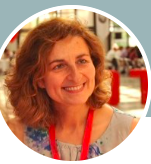
Gulcin Ozkan is Vice Dean (Staffing) and Professor of Finance at King's Business School. She holds an MSc in Economics from the University of Warwick and a PhD from the University of York.Prior to joining King's, she held academic positions at METU, Durham University and the University of York where she held a Chair during 2011-2019. She has also been the Managing Editor of the Bulletin of Economic Research since 2013.Gulcin’s main research focuses on the intersection of macroeconomics and finance covering issues such as financial crises; financial stability; monetary and macroprudential policies; emerging markets; public debt and financial development; fiscal policy and financial constraints and the economics of constitutions.Her recent work is on supply chain networks; Brexit; climate risk; and fiscal policy in recessions. Her book on ‘Why are presidential regimes bad for the economy? Understanding the link between forms of government and economic outcomes’, is forthcoming from Routledge in January 2022. Gulcin supervised a large number of PhD students who are currently working for key international policy-making institutions such as the IMF, OECD and various national central banks around the globe as well as a number of academic institutions in the UK and abroad.
Prof. Muhammad Ali Nasir

Muhammad Ali Nasir joined the University of Leeds in February 2022. Prior to that, he has worked as an Associate Professor in Economics at the University of Huddersfield since July 2020. Dr Nasir has worked as a Senior Lecturer in Economics at Leeds Business School between May 2012 – June 2020. He has a PhD in Economics and is greatly interested in the areas of Monetary Economics, Macroeconomics, Financial Economics and International Economics, He is an active researcher and has published in a number of reputable journals in the last few years. Dr Nasir is also involved in the research supervision of masters and doctoral level students. Dr Nasir is a key team player, possessing an excellent command of a wide range of analytical techniques paired with sound researching capabilities. He is well versed in a wide range of pedagogical and analytical techniques and their context of application. Dr Nasir possesses good communication and interpersonal skills. Dr Nasir demonstrates a strong commitment to innovative pedagogy, enterprise, research-informed teaching and productive collaborative research. Currently, he is working on the challenges of macroeconomic policy formulation and issues around financial stability, particularly in the Post- COVID-19 world.

![]()

 Loading...